
Red Flags of a Retinal Tear vs. Normal Eye Floaters: Spotting Sudden Vision Changes

Red Flags of a Retinal Tear vs. Normal Eye Floaters: Spotting Sudden Vision Changes

Red Flags of a Retinal Tear vs. Normal Eye Floaters: Spotting Sudden Vision Changes

Red Flags of a Retinal Tear vs. Normal Eye Floaters: Spotting Sudden Vision Changes

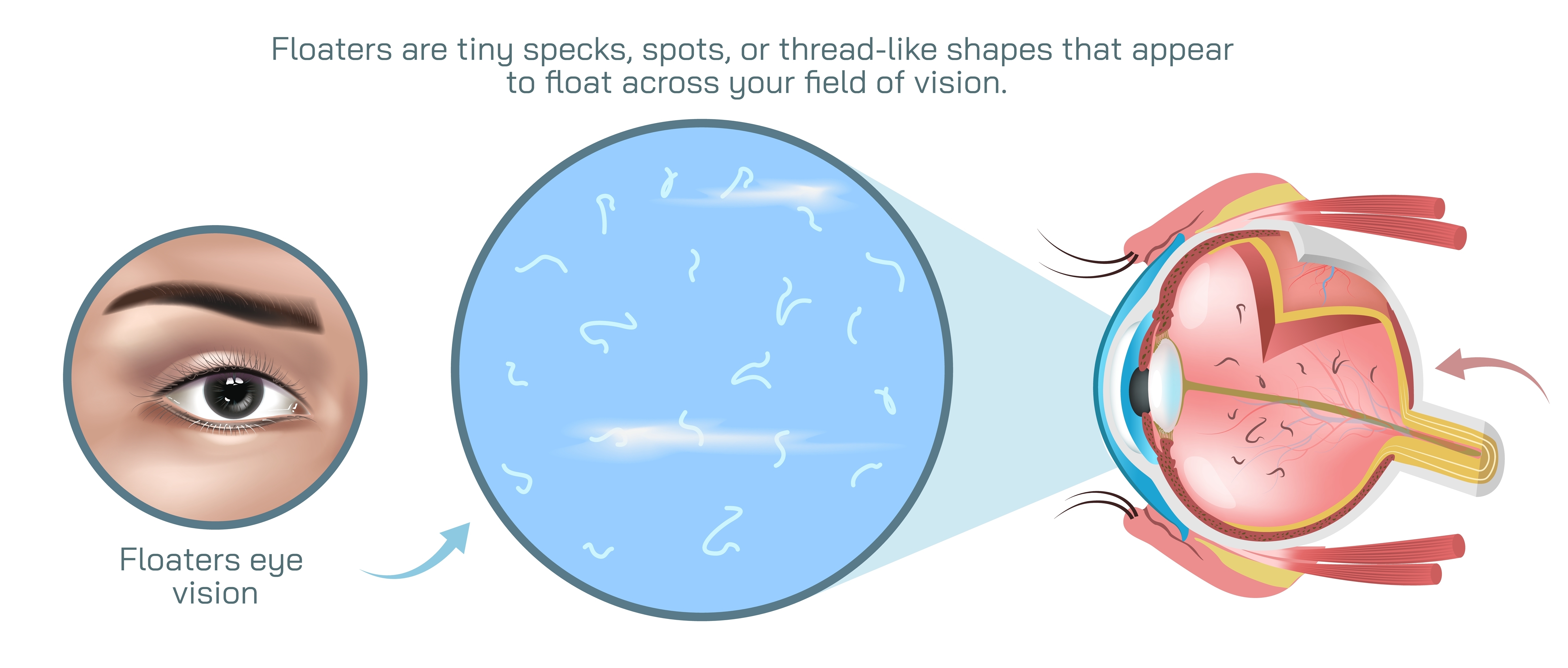
Seeing a small speck drift across your vision is common, especially with age. However, a sudden burst of floaters can signal a retinal tear or detachment that requires immediate attention. Knowing the difference can help Sarasota patients protect their sight and seek retinal care without delay.
What Do Normal Eye Floaters Look Like?
Eye floaters often appear as dots, strands, rings, or cobweb-like shapes that move when you shift your gaze. They are shadows created by small clumps within the vitreous, the gel-like substance that fills the eye.
Long-standing floaters that remain stable are often harmless. They may be easier to notice when looking at a bright sky, computer screen, or white wall. While established floaters typically do not require treatment, any new or changing symptoms should be evaluated.
Warning Signs of a Retinal Tear
A retinal tear can occur when the vitreous pulls on the retina. Fluid may then pass through the opening, potentially leading to a retinal detachment. Because this process can threaten permanent vision loss, Sarasota patients should treat sudden visual changes as an eye emergency.
Contact a retina specialist promptly if you experience:
• A sudden increase or shower of new floaters
• Flashes of light, especially in peripheral vision
• A dark shadow, veil, or curtain across your vision
• Sudden blurred or reduced vision
• New symptoms following an eye injury
• Floaters accompanied by missing areas of vision
These symptoms can affect one or both eyes, although retinal tears commonly develop in one eye at a time.
Why Symptoms Should Not Be Ignored
It is not always possible to distinguish a harmless vitreous change from a retinal tear based on symptoms alone. Posterior vitreous detachment, a common age-related change, may also cause sudden floaters and flashes. A dilated retinal examination is needed to determine whether the retina remains intact.
Waiting to see whether symptoms disappear can allow a retinal tear to progress. Early treatment may seal the tear before fluid collects behind the retina. If detachment has already occurred, more extensive treatment may be needed.
Who Has a Higher Risk?
Retinal tears can happen to anyone, but risk may be higher among people who are very nearsighted, have experienced eye trauma, previously had cataract surgery, or have a personal or family history of retinal tears or detachments. Adults experiencing new floaters should be especially cautious rather than assuming the changes are part of normal aging.
If you’re experiencing sudden floaters, flashes, or a dark curtain in your vision, schedule an urgent retinal evaluation with Gulf Coast Retina Center. Visit our office in Sarasota or Venice, Florida, call (941) 312-2769 to book an appointment, or be seen today.

All Eye
Care Services

Keep
In Touch

contact information
office hours
- Monday:8:00 AM - 5:00 PM
- Tuesday:8:00 AM - 5:00 PM
- Wednesday:8:00 AM - 5:00 PM
- Thursday:8:00 AM - 5:00 PM
- Friday:8:00 AM - 5:00 PM
- Saturday:Closed
- Sunday:Closed
© 2026 Gulf Coast Retina Center. All Rights Reserved.
Powered by:
